Microcrystalline cellulose (MCC) is a versatile excipient widely used across numerous industries, and the demand for microcrystalline cellulose for sale is consistently high. Its unique properties – including excellent compressibility, binding capabilities, and inertness – make it invaluable in pharmaceutical formulations, food processing, cosmetics, and beyond. Understanding its production, applications, and future trends is crucial for professionals in these fields and for ensuring quality and innovation in product development.
Globally, the market for MCC is experiencing substantial growth, driven by the expanding pharmaceutical industry, particularly in emerging economies. According to recent reports, the MCC market is projected to reach billions of dollars in the coming years, with a compound annual growth rate (CAGR) of around 6-8%. This growth is fueled by an increasing demand for solid dosage forms, advancements in drug delivery systems, and a rising awareness of the benefits of MCC in improving product performance. The availability of microcrystalline cellulose for sale from reliable suppliers is, therefore, paramount to maintaining a stable supply chain.
The increasing demand for improved drug formulations and higher quality food products is significantly driving the need for efficient and reliable excipients like MCC. Challenges in sourcing, quality control, and sustainable production practices are all areas being addressed through innovation and strategic partnerships, solidifying the importance of readily available microcrystalline cellulose for sale.
Introduction to microcrystalline cellulose for sale
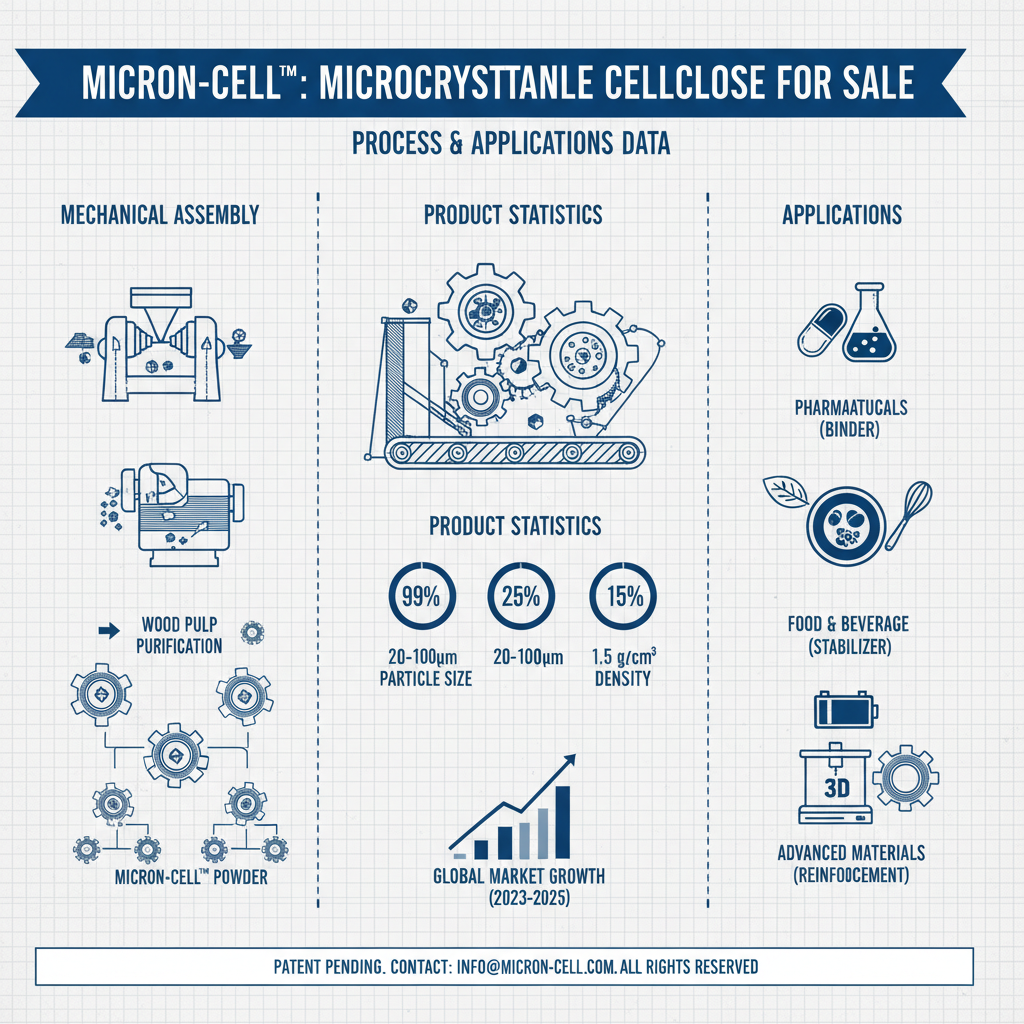
Microcrystalline cellulose (MCC) isn’t just a chemical compound; it’s a fundamental building block for countless products we rely on daily. Its creation involves partially hydrolyzing cellulose, typically from wood pulp, resulting in a purified, crystalline form. The subsequent control over particle size and density directly impacts its performance as a binder, diluent, and disintegrant, making the sourcing of high-quality microcrystalline cellulose for sale absolutely critical for consistent product outcomes.
The demand for microcrystalline cellulose for sale is intrinsically linked to the growth of the pharmaceutical, food, and cosmetic industries. As these sectors strive for innovation – improved drug delivery systems, enhanced food textures, and more stable cosmetic formulations – the unique properties of MCC become indispensable. This explains why a stable and reliable supply of this versatile excipient is essential for manufacturers globally.
Global Relevance and Market Dynamics
The global microcrystalline cellulose market is a multi-billion-dollar industry, with a significant portion concentrated in North America and Europe, but rapidly expanding in Asia-Pacific. This growth is propelled by increasing healthcare expenditure, a burgeoning pharmaceutical sector in countries like India and China, and a growing demand for processed foods. Reliable access to microcrystalline cellulose for sale is therefore crucial for manufacturers in these rapidly developing markets.
Factors influencing the market include raw material prices (wood pulp), manufacturing processes, and regulatory compliance. Sustainability concerns are also playing an increasing role, with a growing demand for MCC produced from responsibly sourced cellulose. The ability of suppliers to offer consistently high-quality microcrystalline cellulose for sale while adhering to stringent environmental standards is becoming a key competitive differentiator.
Furthermore, geopolitical factors and supply chain disruptions can directly impact the availability and cost of MCC, highlighting the importance of diversifying sourcing strategies and establishing strong relationships with trusted suppliers offering consistent microcrystalline cellulose for sale.
Defining Microcrystalline Cellulose
Microcrystalline cellulose is a purified, partially depolymerized cellulose. It isn't a single compound, but rather a group of crystalline cellulose polymers obtained by controlled hydrolysis of alpha-cellulose derived from various sources, most commonly wood pulp. Its key characteristic is its amorphous and crystalline regions, which contribute to its unique functional properties.
In essence, it's a refined form of dietary fiber. While it's technically a carbohydrate, it’s largely indigestible by humans, making it ideal as an excipient. The process of manufacturing microcrystalline cellulose for sale carefully controls the degree of hydrolysis and subsequent purification, influencing its final properties like particle size, density, and moisture content, impacting its performance in various applications.
The significance of MCC extends beyond its chemical composition; it’s a pivotal component in modern manufacturing processes, especially where precise control over formulation characteristics is essential. Its wide acceptance in both pharmaceutical and food applications underscores its safety, reliability, and effectiveness, which are central to understanding the value of procuring dependable microcrystalline cellulose for sale.
Key Properties of Microcrystalline Cellulose
Several key properties contribute to the widespread use of MCC. First and foremost is its excellent compressibility. This makes it ideal for direct compression of tablets, reducing the need for wet granulation – a costly and time-consuming process. Secondly, MCC exhibits superior binding properties, holding ingredients together effectively.
Its high surface area and inherent porosity enable rapid liquid absorption, making it a highly effective disintegrant, facilitating the breakdown of tablets in the body for optimal drug release. Another important property is its chemical inertness, meaning it doesn’t interact with other ingredients in a formulation, ensuring stability and efficacy. The consistent quality of microcrystalline cellulose for sale directly impacts these critical properties.
MCC Properties Impacting Formulation
Applications Across Industries
The pharmaceutical industry remains the largest consumer of MCC, utilizing it as a binder, diluent, and disintegrant in tablets and capsules. In the food industry, it’s used as a texturizer, stabilizer, and anti-caking agent in products like baked goods, dairy products, and sauces.
The cosmetic industry leverages MCC for its absorbent properties and ability to enhance product texture in creams, lotions, and powders. Beyond these core applications, MCC finds use in paints, coatings, and even adhesives. The versatility of reliably sourced microcrystalline cellulose for sale is a significant driver of its continuous demand.
In regions like North America and Europe, pharmaceutical applications dominate, while in Asia-Pacific, food and cosmetic applications are growing rapidly. Companies operating in these diverse markets require suppliers capable of providing consistent quality and adapting to specific regional regulations when accessing microcrystalline cellulose for sale.
Advantages and Long-Term Value
One of the key advantages of using MCC is its cost-effectiveness. Compared to other excipients, it often provides a more economical solution without compromising performance. Its chemical inertness and safety profile also contribute to its long-term value, reducing the risk of product recalls and ensuring consumer safety.
From a sustainability perspective, sourcing MCC from responsibly managed forests offers an environmentally friendly option. Moreover, the enhanced product stability and efficacy achieved through the use of MCC can reduce waste and improve overall resource utilization. Access to high-quality microcrystalline cellulose for sale contributes to a positive brand image and builds trust with consumers.
Future Trends and Innovations
Ongoing research focuses on enhancing the properties of MCC through nanotechnology and surface modification. These advancements aim to create MCC particles with improved flowability, compressibility, and dispersibility, further expanding its applications. The development of sustainable production methods, utilizing alternative cellulose sources like agricultural waste, is also gaining momentum.
The integration of digital technologies, such as machine learning, is being used to optimize MCC manufacturing processes and ensure consistent quality control. Furthermore, the demand for customized MCC grades tailored to specific formulation needs is expected to drive innovation in the industry, with suppliers focusing on providing bespoke microcrystalline cellulose for sale solutions.
Expect to see an increased emphasis on “green” MCC – products derived from sustainable sources and manufactured using environmentally responsible practices, aligning with global trends toward greater sustainability and circular economies, thereby impacting where to procure microcrystalline cellulose for sale.
Challenges and Solutions
One of the primary challenges in utilizing MCC is its potential for variability in physical properties, depending on the source of cellulose and the manufacturing process. This can lead to inconsistencies in formulation performance. Addressing this requires rigorous quality control measures and a thorough understanding of the material’s characteristics.
Another challenge is ensuring a sustainable supply of cellulose, particularly as demand continues to grow. Solutions include promoting responsible forestry practices, exploring alternative cellulose sources, and investing in efficient manufacturing technologies. The ability to source reliable microcrystalline cellulose for sale from suppliers committed to sustainability is critical.
Furthermore, the relatively low bulk density of MCC can sometimes pose handling challenges. Strategies to overcome this include using compaction techniques and employing specialized equipment designed for handling low-density powders. Comprehensive evaluation and the utilization of dependable microcrystalline cellulose for sale are essential components of the solution.
Summary of Key Challenges and Solutions Related to Microcrystalline Cellulose
| Challenge |
Impact on Formulation |
Proposed Solution |
Implementation Cost (1-10) |
| Variability in Physical Properties |
Inconsistent Tablet Hardness |
Rigorous Quality Control |
6 |
| Sustainability of Cellulose Source |
Environmental Impact |
Responsible Forestry Practices |
7 |
| Low Bulk Density |
Handling Difficulties |
Compaction Techniques |
4 |
| Raw Material Price Fluctuations |
Increased Production Costs |
Long-Term Contracts with Suppliers |
5 |
| Limited Particle Size Control |
Impact on Disintegration Rate |
Advanced Milling Technologies |
8 |
| Regulatory Compliance |
Potential for Product Delays |
Supplier Audits & Documentation |
9 |
FAQS
Lead times for microcrystalline cellulose for sale typically range from 2-6 weeks, depending on the quantity ordered and current stock levels. Larger, custom orders may require longer lead times. We recommend contacting us directly to discuss your specific requirements and obtain an accurate delivery estimate. We aim to provide prompt and reliable service, ensuring your formulations are never delayed due to material shortages.
We offer a comprehensive range of microcrystalline cellulose for sale grades, including varying particle sizes, moisture content, and densities to meet diverse formulation needs. Our grades are suitable for direct compression, wet granulation, and other pharmaceutical and food applications. Detailed specifications for each grade are available on our website or upon request from our technical support team.
Yes, our microcrystalline cellulose for sale meets or exceeds the requirements of the United States Pharmacopeia (USP) and National Formulary (NF). We adhere to strict quality control standards and provide comprehensive documentation, including Certificates of Analysis (COAs), to ensure compliance with regulatory requirements. This is crucial for pharmaceutical formulations and ensures product safety and efficacy.
The minimum order quantity (MOQ) for microcrystalline cellulose for sale varies depending on the grade and packaging size. Generally, we offer flexible MOQ options to accommodate both small-scale and large-scale customers. Contact our sales team for specific MOQ details and to discuss your individual needs.
We package microcrystalline cellulose for sale in various packaging options, including multi-wall paper bags, fiber drums, and bulk containers, to ensure product integrity during transit. We work with reputable shipping carriers to provide reliable and cost-effective delivery services worldwide. Proper packaging and shipping procedures are critical to maintaining the quality and purity of the product.
Yes, we offer custom particle size and density microcrystalline cellulose for sale to meet specific formulation requirements. Our team can work with you to develop a tailored product that optimizes performance in your application. This customization requires a discussion of your specifications and may involve a longer lead time and minimum order quantity.
Conclusion
Microcrystalline cellulose stands as a vital excipient across numerous industries, offering a unique blend of functionality, cost-effectiveness, and safety. Its versatile properties ensure superior performance in pharmaceutical formulations, food processing, and cosmetic applications. The continuing innovation in production techniques and the drive towards sustainable sourcing promise a bright future for MCC and its increasing relevance in diverse sectors.
As demand continues to rise, prioritizing reliable suppliers offering consistently high-quality microcrystalline cellulose for sale will be paramount. By staying informed about emerging trends and embracing sustainable practices, manufacturers can unlock the full potential of this invaluable excipient and ensure the continued development of innovative and effective products. Visit our website today to explore our comprehensive range of MCC products and discover how we can support your formulation needs: www.hpmcpowder.com.