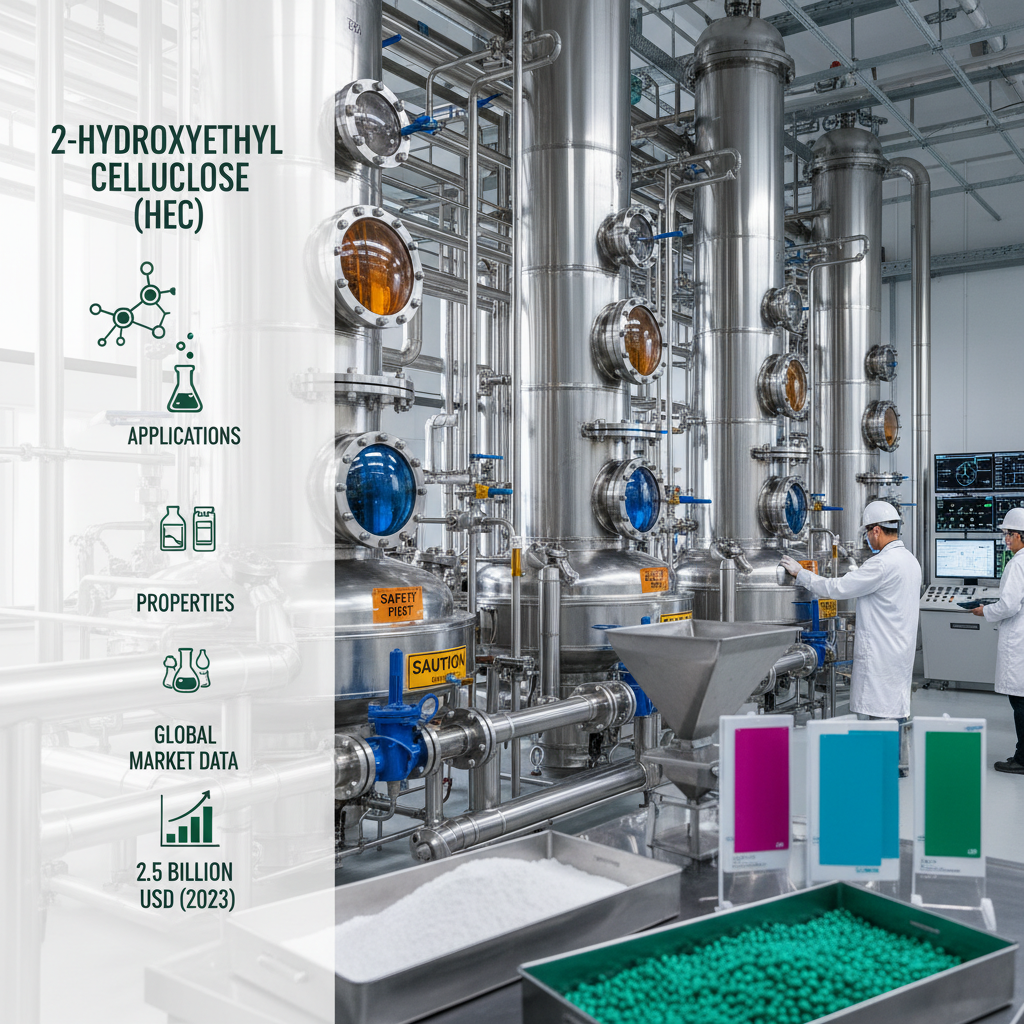
Look, I spend my days boots-on-the-ground, watching how materials actually perform. It's not about lab specs; it's about what holds up when the weather hits, when the crew's rushing, and when things go wrong. That's where 2 hydroxyethyl cellulose comes into play. It's not a glamorous ingredient, but it’s the backbone of consistency in so many of the products we rely on. We're talking about everything from tile adhesives to self-leveling compounds, and even some of the newer concrete mixes – that subtle difference between a job done right and a costly rework is often down to getting the right polymer mix, and 2 hydroxyethyl cellulose plays a huge role.
I’ve seen contractors struggle with products that just don’t mix properly, that slump too much, or crack under stress. The biggest headaches always boil down to control – controlling the viscosity, the water retention, the workability. 2 hydroxyethyl cellulose isn't a magic bullet, but it gives you that control. It allows formulators to dial in the performance characteristics they need for specific applications, and it allows us, on site, to actually deliver a product that behaves predictably.
It’s all about reliability, frankly. In this business, time is money, and rework is a disaster. A product that performs consistently, that’s easy to work with, and that delivers a durable result—that's what we’re after. And that's where understanding the properties of something like 2 hydroxyethyl cellulose really makes a difference.
The Real-World Impact of 2 hydroxyethyl cellulose
Let’s be clear: I don't care about the chemical formula. I care about whether the mortar sticks to the brick in the rain. 2 hydroxyethyl cellulose provides the necessary thickening and water retention that makes that possible. It's a workhorse. We see it everywhere, from improving the sag resistance of coatings to enhancing the adhesion of tile adhesives. It’s a foundational component in achieving consistent, reliable results, especially in demanding environments.
The construction industry is moving toward higher-performance materials, and 2 hydroxyethyl cellulose is a key enabler. It allows formulators to push the boundaries of what’s possible while still maintaining workability and ease of application. That means faster project completion times, reduced material waste, and ultimately, a better quality finished product.
Understanding the Core Properties
The beauty of 2 hydroxyethyl cellulose is its versatility. It’s a non-ionic water-soluble polymer, meaning it doesn't introduce charges that can interfere with other ingredients in a formulation. That's huge. This allows it to work alongside a wide range of cement types, resins, and additives without causing unwanted reactions. It’s basically a neutral player that enhances the overall system.
The real trick is controlling the degree of substitution – how many hydroxyethyl groups are attached to the cellulose chain. That dictates the polymer’s solubility, viscosity, and water retention capacity. A higher degree of substitution generally means better solubility and lower viscosity, while a lower degree of substitution leads to higher viscosity and greater water retention. It’s a balancing act, and formulators need to understand how to tweak that parameter to achieve the desired performance characteristics.
And it's not just about the chemistry. The molecular weight of the 2 hydroxyethyl cellulose also plays a vital role. Higher molecular weight polymers generally provide better thickening efficiency, but can also be more difficult to dissolve. Again, it’s all about finding the sweet spot for the specific application.
Key Factors Influencing Performance
Several factors can impact how 2 hydroxyethyl cellulose performs in the field. Temperature is a big one. Higher temperatures can accelerate the degradation of the polymer, reducing its effectiveness. That's why it's crucial to store materials properly and follow the manufacturer's recommendations.
pH is another critical factor. Extreme pH levels can also break down the polymer, so maintaining a neutral pH environment is essential. The presence of certain salts and other ions can also interfere with the polymer’s performance, so it's important to consider the overall formulation chemistry.
Shear forces during mixing and application also matter. Excessive shear can degrade the polymer, reducing its viscosity and thickening efficiency. That’s why it's important to use appropriate mixing equipment and avoid over-mixing the formulation. Getting the mixing process dialed in is crucial for optimal performance.
Applications Across Construction & Beyond
We see 2 hydroxyethyl cellulose popping up everywhere. Think about self-leveling underlayments – it controls the flow and prevents segregation of the components. In cement-based grouts, it improves workability and prevents cracking. Tile adhesives rely on it for strong adhesion and sag resistance.
But it’s not limited to concrete and masonry. You’ll find it in exterior insulation and finish systems (EIFS), enhancing the workability and adhesion of the base coat. It’s even used in some paint formulations to improve brushability and prevent settling of pigments.
Beyond construction, it’s utilized in industries like pharmaceuticals, cosmetics, and food processing. The same properties that make it valuable in building materials—thickening, water retention, and stabilization—are also beneficial in these other applications.
Performance of 2 hydroxyethyl cellulose Across Applications
Advantages: Beyond the Spec Sheet
It's easy to get lost in the technical details, but the real benefit of 2 hydroxyethyl cellulose is the reliability it brings to the job site. It minimizes failures, reduces rework, and ultimately saves time and money. That’s what matters to contractors.
From a sustainability standpoint, it can also contribute to reducing material waste. By improving the performance and durability of building materials, it extends their lifespan and reduces the need for frequent replacements. That’s a win-win for everyone.
Future Trends and Innovations
We're seeing a growing demand for more sustainable building materials, and that's driving innovation in the field of cellulose ethers. Researchers are exploring new methods for producing 2 hydroxyethyl cellulose from renewable sources, reducing its carbon footprint.
There's also a lot of interest in developing modified 2 hydroxyethyl cellulose polymers with enhanced properties, such as improved compatibility with specific cement types or increased resistance to degradation. Nanotechnology is another area of exploration, with researchers investigating the use of nano-sized cellulose particles to further enhance the performance of building materials.
Digitalization and automated mixing technologies are also playing a role. Precise dosing and automated mixing systems can ensure that 2 hydroxyethyl cellulose is consistently and accurately incorporated into formulations, maximizing its effectiveness.
Common Challenges and Practical Solutions
One of the biggest challenges is ensuring proper dispersion of the polymer in the formulation. If it’s not properly dispersed, it can lead to lumps and inconsistent performance. The solution? Use a high-shear mixer and add the polymer slowly while stirring vigorously.
Another challenge is maintaining consistency from batch to batch. Variations in the raw materials or the manufacturing process can lead to inconsistencies in the polymer’s properties. Strict quality control measures and regular testing are essential to ensure consistent performance.
Finally, compatibility issues can arise when using 2 hydroxyethyl cellulose in complex formulations. Careful selection of other ingredients and thorough testing are necessary to avoid unwanted interactions.
Summary of Key Challenges and Solutions for 2 hydroxyethyl cellulose Application
| Challenge |
Impact on Performance |
Solution |
Prevention Strategy |
| Poor Dispersion |
Lumping, inconsistent viscosity |
High-shear mixing, slow addition |
Pre-dispersing the polymer in water |
| Batch-to-Batch Variation |
Inconsistent thickening, water retention |
Strict quality control, regular testing |
Supplier audits and consistent sourcing |
| Compatibility Issues |
Reduced effectiveness, instability |
Careful ingredient selection, testing |
Formulation review by experts |
| Temperature Sensitivity |
Degradation, reduced performance |
Proper storage, temperature control |
Using stabilized polymer grades |
| pH Sensitivity |
Polymer breakdown, reduced viscosity |
Maintaining neutral pH |
pH buffering agents in formulation |
| Shear Degradation |
Reduced thickening efficiency |
Optimized mixing parameters |
Using higher molecular weight grades |
FAQS
Generally, 2 hydroxyethyl cellulose powder has a shelf life of around 2-3 years when stored in a cool, dry place, away from direct sunlight. However, it’s always best to check the manufacturer's specifications, as the exact shelf life can vary depending on the grade and packaging. Degradation can occur over time, leading to reduced thickening efficiency, so proper storage is crucial.
Yes, but it depends on the specific grade and formulation. Some grades of 2 hydroxyethyl cellulose are more resistant to degradation from UV exposure and temperature fluctuations. It’s essential to choose a grade specifically designed for exterior applications and to incorporate UV stabilizers into the formulation to prolong its lifespan. Regular maintenance and reapplication may also be necessary in particularly harsh environments.
The key is to avoid lumping. Slowly sprinkle the powder into vigorously swirling water, rather than adding it all at once. Using a high-shear mixer can also help ensure complete dispersion. Pre-dispersing the powder in a small amount of glycol or other compatible solvent can also facilitate easier incorporation into the main water phase.
Yes, it can. 2 hydroxyethyl cellulose can slightly increase drying time by slowing down the evaporation of water. However, this effect is generally minimal and can be mitigated by adjusting the formulation accordingly. In some cases, it can actually improve film formation and reduce cracking by extending the open time.
Generally, yes, but compatibility can vary depending on the specific cement composition. It's always recommended to conduct small-scale compatibility tests before incorporating 2 hydroxyethyl cellulose into a large-scale cement-based formulation. Certain additives or high levels of alkalis can sometimes interfere with its performance.
2 hydroxyethyl cellulose is generally considered safe, but like any fine powder, it can be irritating to the eyes and respiratory system. It’s best to wear safety glasses and a dust mask when handling the powder. Avoid creating dust and ensure adequate ventilation. Refer to the Safety Data Sheet (SDS) for detailed safety information.
Conclusion
2 hydroxyethyl cellulose isn't a flashy ingredient, but it’s a foundational component in countless construction products. It's the quiet workhorse that ensures consistency, reliability, and performance. Understanding its properties and how to properly utilize it is critical for anyone involved in formulating or applying building materials.
Looking ahead, continued innovation in sustainable production methods and polymer modifications will further enhance the value of 2 hydroxyethyl cellulose. By embracing these advancements and continuing to prioritize quality control, we can ensure that this versatile polymer remains a vital ingredient in building a more durable and sustainable future. For more information and to explore our range of 2 hydroxyethyl cellulose products, visit our website: www.hpmcpowder.com.