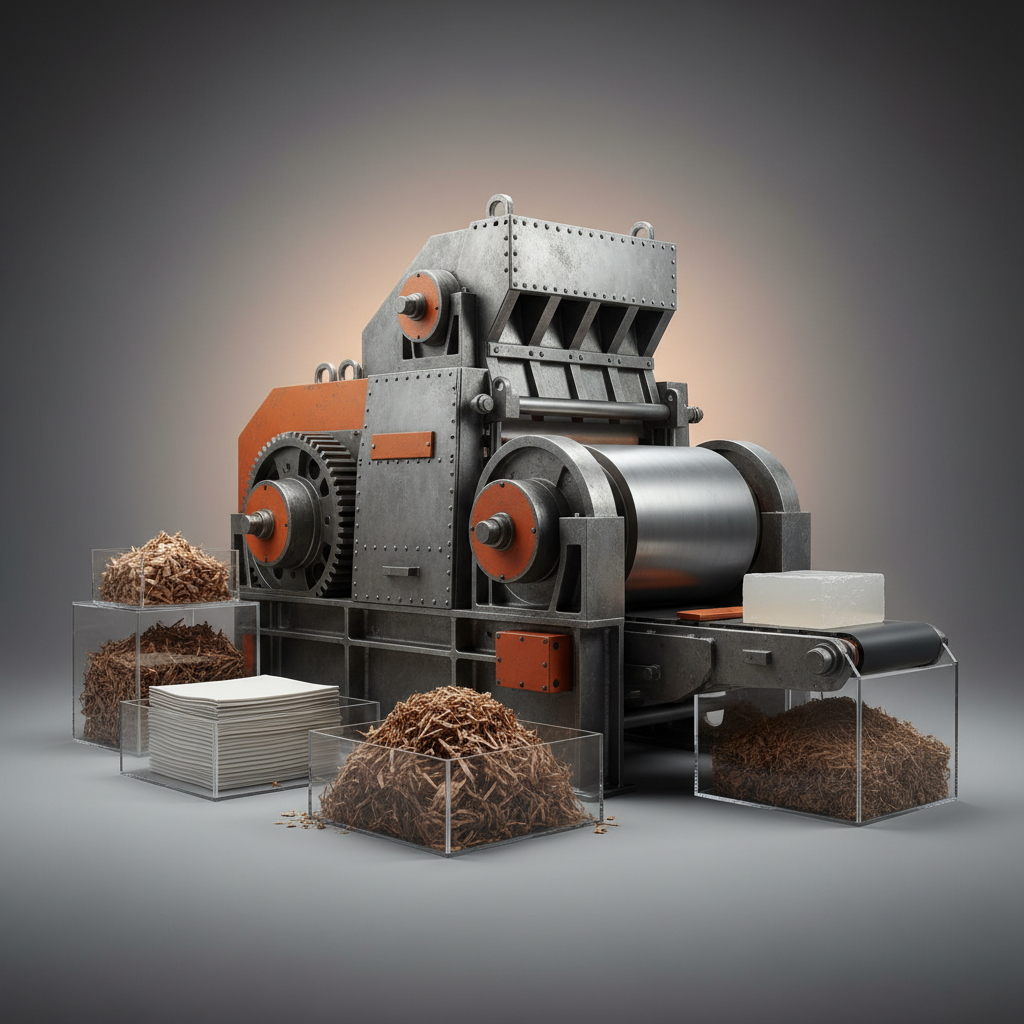
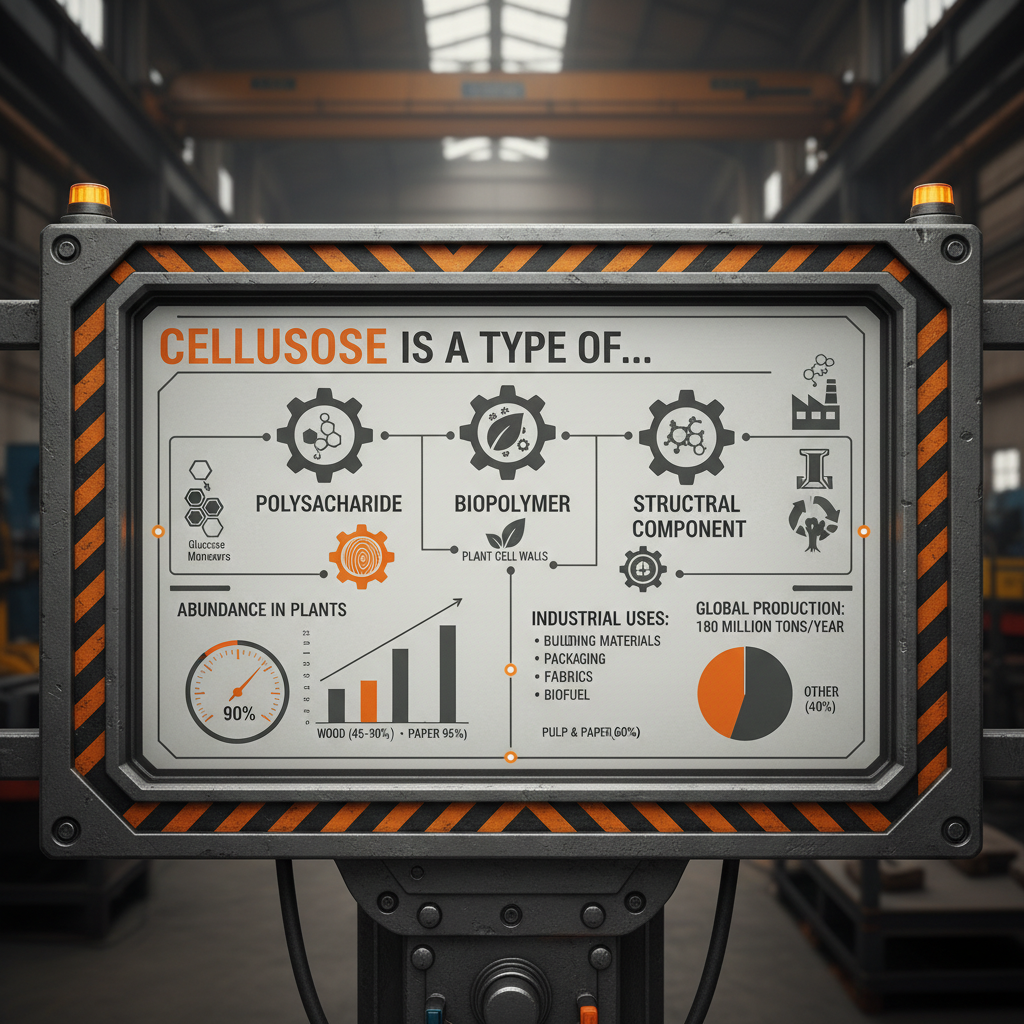
Cellulose, the most abundant organic polymer on Earth, forms the structural component of plant cell walls. Understanding the diverse types of cellulose is crucial for advancements across numerous industries, from textiles and pharmaceuticals to construction and sustainable materials. Its versatility stems from its renewability, biodegradability, and tunable properties, offering solutions to pressing global challenges like resource depletion and environmental pollution. This exploration delves into the various forms of cellulose and their impactful applications.
The global relevance of cellulose is undeniable. With an estimated annual production of over 50 billion tonnes, it surpasses the production of any other polymer. The United Nations Sustainable Development Goals (SDGs), particularly those related to responsible consumption and production (SDG 12) and climate action (SDG 13), are heavily influenced by advancements in cellulose processing and utilization. Innovations in cellulose-based materials can reduce reliance on fossil fuels, minimize waste, and promote a circular economy.
A significant challenge lies in efficiently extracting and modifying cellulose to achieve desired functionalities. Traditional methods can be energy-intensive and environmentally damaging. However, ongoing research focuses on developing greener, more sustainable approaches, like enzymatic hydrolysis and bacterial cellulose production, to unlock the full potential of types of cellulose and address the growing demand for eco-friendly materials.
The Fundamentals of types of cellulose
At its core, cellulose is a linear polysaccharide composed of repeating glucose units linked by β(1→4) glycosidic bonds. This seemingly simple structure belies a remarkable diversity in forms, stemming from variations in molecular weight, degree of polymerization, crystallinity, and the presence of modifying groups. These differences profoundly impact its physical and chemical properties, dictating its suitability for various applications.
Understanding these fundamental characteristics is pivotal for tailoring cellulose for specific functionalities. For instance, the degree of polymerization dictates the strength and flexibility of the material, while crystallinity influences its resistance to degradation and solubility. The different types of cellulose, like microcrystalline cellulose (MCC) and cellulose nanocrystals (CNC), are created through processes that manipulate these structural parameters.
Chemical Composition and Structural Variations
While the basic building block remains glucose, the arrangement and interactions of cellulose chains create a hierarchy of structural levels. The elementary fibril, composed of multiple cellulose chains, is the fundamental unit. These fibrils then assemble into microfibrils, and finally, into macroscopic cellulose fibers found in plant tissues. Different plant sources yield cellulose with varying proportions of these structural components.
Significant variations arise from the presence of hemicellulose and lignin, which are often intertwined with cellulose in plant cell walls. These compounds affect the purity and processability of the cellulose. Separating cellulose from these components is a crucial step in many industrial applications. The degree of this separation, alongside the specific chemical treatment applied, dictates the final properties of the cellulose product.
Furthermore, chemical modifications, such as carboxymethylation and acetylation, introduce functional groups onto the cellulose backbone, altering its solubility, reactivity, and mechanical properties. These modified celluloses expand the range of applications far beyond the uses of native cellulose.
Key Properties Influencing Applications
The physical and chemical properties of types of cellulose profoundly influence their application potential. Key characteristics include high tensile strength, inherent biodegradability, biocompatibility, and the ability to form films and gels. The hydroxyl groups on the glucose units allow for extensive hydrogen bonding, contributing to the material’s strength and structure.
However, native cellulose is often limited by its insolubility in common solvents and its tendency to aggregate. Modifications, such as creating cellulose derivatives or nanoscale forms like CNCs, overcome these limitations, unlocking new avenues for its use. The surface chemistry of these derivatives is critical for tailoring their interactions with other materials.
Crystallinity plays a crucial role in determining the mechanical properties and stability of cellulose. Highly crystalline cellulose is stronger and more resistant to degradation, while amorphous regions offer greater flexibility and reactivity. Controlling the degree of crystallinity is therefore a vital aspect of cellulose processing.
Performance Metrics of different types of cellulose
Evaluating the performance of different types of cellulose requires considering several key metrics. Tensile strength, Young’s modulus, and elongation at break quantify the mechanical properties. Water absorption capacity, swelling ratio, and solubility indicate the material’s interaction with fluids.
Thermal stability, measured by thermogravimetric analysis (TGA), reveals the temperature at which the cellulose begins to decompose. Furthermore, the aspect ratio (length-to-diameter ratio) is critical for nanoscale cellulose forms like CNCs, influencing their reinforcing capabilities in composite materials.
Comparative Performance of cellulose Processing Methods
Global Industrial Applications of types of cellulose
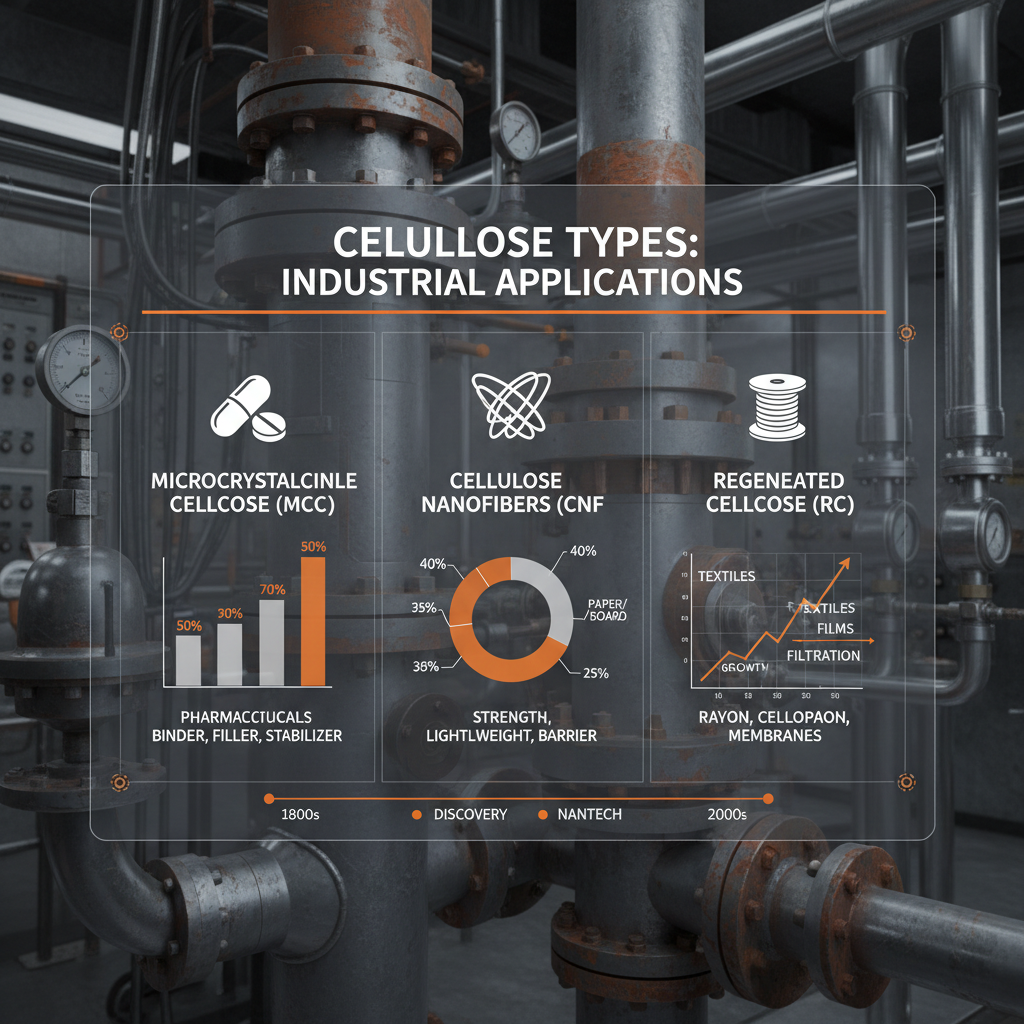
The applications of different types of cellulose are remarkably diverse. In the textile industry, cellulose fibers like cotton and rayon remain dominant. The paper and packaging industries rely heavily on cellulose pulp, both virgin and recycled. Microcrystalline cellulose (MCC) is a crucial excipient in the pharmaceutical industry, serving as a binder, diluent, and disintegrant in tablets.
Nanocellulose, particularly CNCs and cellulose nanofibers (CNFs), are emerging as high-performance reinforcing agents in composites, enhancing strength and reducing weight. They also find applications in barrier coatings, adhesives, and even biomedical devices. Cellulose derivatives, like carboxymethyl cellulose (CMC) and methyl cellulose (MC), are used as thickeners, stabilizers, and emulsifiers in food, cosmetics, and industrial applications.
Sustainability and Economic Advantages
Cellulose offers significant sustainability advantages over petroleum-based materials. As a renewable resource, its production doesn’t deplete finite fossil fuel reserves. Moreover, cellulose is biodegradable, reducing the burden on landfills and minimizing plastic pollution. The relatively low cost of cellulose raw materials contributes to its economic viability.
Investing in cellulose-based technologies fosters a circular economy, where materials are reused and recycled, minimizing waste and maximizing resource efficiency. Furthermore, the development of bio-refineries that process cellulose into a range of valuable products can create new economic opportunities and reduce reliance on imported materials.
The societal benefits extend beyond environmental and economic gains. Cellulose-based materials are often biocompatible and non-toxic, enhancing safety in various applications. Supporting research and development in this field promotes innovation and contributes to a more sustainable future.
Future Innovations and Emerging Trends
Ongoing research is pushing the boundaries of cellulose technology. Genetically engineered bacteria are being used to produce cellulose with tailored properties. New solvent systems are being developed to improve cellulose dissolution and processing. 3D printing with cellulose-based materials is gaining traction, enabling the creation of complex geometries and customized products.
The integration of cellulose with other biomaterials, such as chitin and lignin, is creating novel composite materials with enhanced functionalities. Advances in nanotechnology are further refining the properties of nanocellulose, expanding its applications in areas like sensors, energy storage, and drug delivery.
Policy initiatives promoting sustainable materials and reducing plastic waste are driving demand for cellulose-based alternatives. The development of standardized testing methods and certifications will be crucial for ensuring the quality and performance of these materials.
Summary of Challenges and Solutions in Cellulose Technology
| Challenge |
Impact on Performance |
Potential Solution |
Implementation Stage |
| Insolubility of Native Cellulose |
Limits processing options and applications. |
Chemical Modification (e.g., CMC, MC) or Nanocellulose Production |
Mature |
| High Energy Consumption in Extraction |
Increases environmental footprint and costs. |
Enzymatic Hydrolysis or Steam Explosion |
Pilot Scale |
| Aggregation of Nanocellulose |
Reduces dispersion and performance in composites. |
Surface Functionalization or Chemical Modification |
Research & Development |
| Cost of Nanocellulose Production |
Hinders widespread adoption in cost-sensitive applications. |
Optimization of Production Processes and Scaling Up |
Pilot Scale |
| Limited Long-Term Stability |
Degradation over time reduces material properties. |
Crosslinking or Incorporation of Stabilizers |
Research & Development |
| Scaling Up Production |
Difficulty in maintaining quality and consistency at large scales. |
Continuous Processing and Automated Control Systems |
Demonstration Scale |
FAQS
MCC consists of partially depolymerized cellulose with a particle size typically ranging from 30-200 μm, offering good compressibility and flowability. CNCs, on the other hand, are individual, highly crystalline cellulose chains extracted from cellulose fibers, with dimensions around 2-20 nm. This dramatically smaller size results in much higher surface area, improved reinforcing capability in composites, and unique optical properties. MCC is commonly used in pharmaceuticals, while CNCs are ideal for advanced materials like nanocomposites and barrier coatings.
The source significantly affects cellulose properties. Wood cellulose contains lignin and hemicellulose, requiring purification for many applications. Cotton cellulose is highly pure but may have shorter chain lengths. Bacterial cellulose, produced by certain bacteria, has a remarkably high purity, high water holding capacity, and a unique nanofibrillar network structure. These differences in composition and structure translate into varying mechanical, thermal, and chemical characteristics, influencing their suitability for different uses.
Cellulose is a renewable resource derived from plants, unlike plastics that rely on finite fossil fuels. Cellulose is also biodegradable, reducing landfill waste and minimizing pollution. Its production often requires less energy and generates fewer greenhouse gas emissions than plastic production. Furthermore, the use of cellulose promotes sustainable forestry practices and supports a circular economy, fostering a more environmentally responsible approach to material sourcing.
While native cellulose is hydrophilic (water-attracting), it can be modified to become hydrophobic (water-repelling). This is achieved through chemical modifications, such as grafting hydrophobic groups onto the cellulose surface, or by creating composites with water-resistant polymers. Nanocellulose coatings, combined with hydrophobic treatments, can effectively impart water resistance to paper, textiles, and other materials, opening up possibilities for sustainable packaging and protective coatings.
Current research focuses on scalable and cost-effective production of CNCs and CNFs, exploring novel solvent systems for cellulose dissolution, and developing new applications in areas like biomedical engineering (drug delivery, tissue scaffolds), energy storage (flexible batteries, supercapacitors), and advanced composites (high-strength lightweight materials). Furthermore, researchers are investigating the use of cellulose as a building block for sustainable plastics and biodegradable packaging.
Cellulose finds applications in construction as a component of insulation materials (cellulose fiber insulation), as a binder in wood composites (particleboard, MDF), and as a reinforcing agent in concrete. Emerging applications include cellulose-based building panels and biocomposites that offer sustainable alternatives to traditional building materials. Nanocellulose is also being explored as a strengthening agent for concrete, enhancing its durability and reducing cracking.
Conclusion
The diverse types of cellulose represent a cornerstone of sustainable materials science. From its fundamental structural characteristics to its wide-ranging applications, cellulose offers a versatile and renewable alternative to fossil-fuel-based materials. Understanding the properties and potential of different cellulose forms is critical for addressing global challenges related to resource depletion, pollution, and climate change.
Continued investment in research and development, alongside supportive policies and industrial collaborations, will unlock the full potential of cellulose. By embracing innovation and promoting a circular economy, we can harness the power of this remarkable biopolymer to build a more sustainable and resilient future. Visit our website at www.hpmcpowder.com to learn more about our cellulose products and solutions.