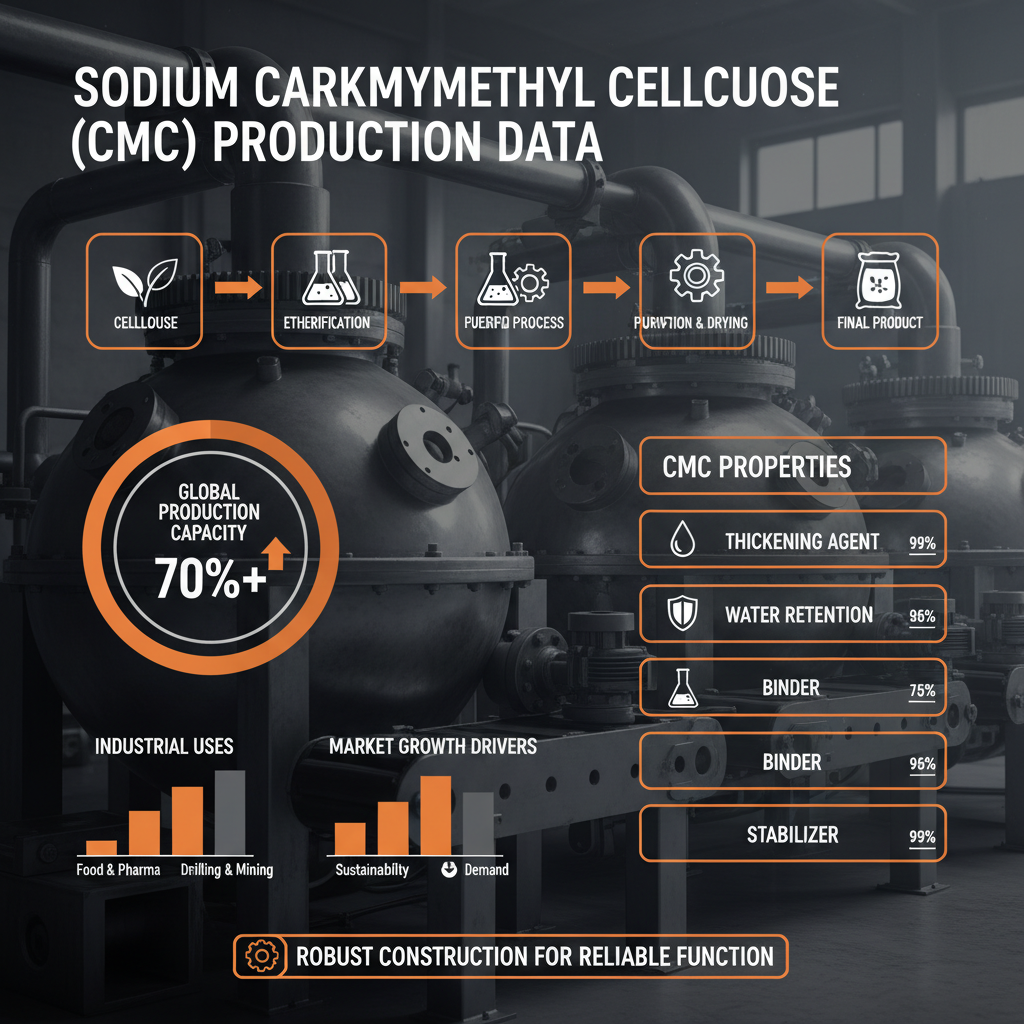
Sodium carboxymethyl cellulose (CMC) is a versatile anionic polysaccharide derived from cellulose. Its unique properties, including thickening, binding, film-forming, and stabilization capabilities, make it a crucial ingredient across a surprisingly wide range of industries. From food and pharmaceuticals to detergents and oil drilling, CMC plays an essential, often unseen, role in enhancing product performance and usability.
Globally, the demand for sodium carboxymethyl cellulose is steadily increasing, driven by population growth, industrial expansion, and a growing awareness of its environmentally friendly attributes compared to some synthetic alternatives. The rising demand for processed foods, coupled with the need for effective and stable pharmaceutical formulations, is particularly significant. Understanding its production, properties, and applications is paramount for businesses and researchers alike.
As a globally significant material, sodium carboxymethyl cellulose isn't simply a chemical compound; it's a facilitator of modern convenience and a contributor to advancements in various sectors. Its availability and adaptability provide cost-effective solutions to a diverse set of technical challenges, making it indispensable in today’s world.
The Fundamental Properties of sodium carboxymethyl cellulose
The defining characteristic of sodium carboxymethyl cellulose lies in its ability to modify the viscosity of solutions. This thickening property is crucial in industries like food and pharmaceuticals, where texture and stability are paramount. The degree of substitution (DS) – the number of carboxymethyl groups attached to each cellulose molecule – directly influences these properties, allowing for tailored CMC grades to suit specific application requirements.
Beyond viscosity, sodium carboxymethyl cellulose exhibits excellent water solubility and forms clear, odorless, and tasteless solutions. It’s also remarkably stable across a wide pH range and demonstrates compatibility with numerous other ingredients, further broadening its applicability. Its film-forming capability is leveraged in coatings and adhesives, while its suspending properties are vital in keeping particles dispersed in liquid formulations.
The Global Significance of Sodium Carboxymethyl Cellulose
Sodium carboxymethyl cellulose is a globally traded commodity, with major production hubs in Asia, particularly China and India. These regions benefit from readily available cellulose sources and cost-effective manufacturing processes. The United States and Europe also maintain significant CMC production capacity, catering to specialized applications and stringent quality standards. The global market is estimated to be worth billions of dollars, reflecting its widespread use across diverse sectors.
According to recent market analyses, the demand for sodium carboxymethyl cellulose is projected to continue its upward trajectory, driven by growing populations and expanding industries in emerging economies. The increasing demand for eco-friendly and sustainable materials is also contributing to its popularity. However, supply chain disruptions and fluctuations in raw material prices (cellulose pulp) present ongoing challenges for the industry.
The increasing regulations regarding food safety and pharmaceutical quality further amplify the significance of reliable and high-purity sodium carboxymethyl cellulose. Manufacturers are consistently investing in research and development to enhance production efficiency, improve product performance, and meet the evolving needs of global markets.
Defining Sodium Carboxymethyl Cellulose: A Detailed Explanation
Sodium carboxymethyl cellulose is a water-soluble cellulose derivative, chemically produced by the reaction of cellulose with chloroacetic acid in the presence of sodium hydroxide. This process introduces carboxymethyl groups (-CH2-COOH) onto the cellulose backbone, creating an anionic polymer. The resulting substance possesses a unique combination of properties that distinguish it from its parent material, cellulose.
The connection to modern industry stems from its versatility; it isn't simply a replacement for other materials but rather an enhancer. In pharmaceuticals, it acts as a binder, disintegrant, and viscosity modifier in tablets and suspensions. In the food industry, it provides texture, stability, and prevents ice crystal formation in frozen desserts. Its role extends beyond these core areas, touching upon applications in textiles, paper, and even oil drilling fluids.
Fundamentally, sodium carboxymethyl cellulose bridges the gap between natural polymer resources and the demands of modern manufacturing. It represents a successful example of chemical modification enhancing a natural material’s functionality and expanding its utility across a vast spectrum of industries and fulfilling vital humanitarian needs by enhancing food security and medical product stability.
Core Characteristics Influencing sodium carboxymethyl cellulose Application
Viscosity: The ability of sodium carboxymethyl cellulose to increase the thickness of a liquid is arguably its most important property. Viscosity is determined by the molecular weight and the degree of substitution, allowing for precise control over fluid behavior in diverse applications.
Water Solubility: Sodium carboxymethyl cellulose dissolves readily in both cold and hot water, forming clear and stable solutions. This solubility is essential for its use in aqueous-based formulations.
Stability: It exhibits excellent stability across a wide pH range and is generally unaffected by salts and organic solvents. This robustness ensures consistent performance in various environments.
Film-forming Ability: The ability to form flexible, transparent films makes sodium carboxymethyl cellulose valuable in coatings, adhesives, and packaging applications.
Binding Capacity: Sodium carboxymethyl cellulose effectively binds particles together, preventing sedimentation and maintaining homogeneity in suspensions and emulsions.
Thixotropy: Some grades exhibit thixotropic behavior, meaning their viscosity decreases under shear stress and recovers upon standing, ideal for applications like paints and coatings.
sodium carboxymethyl cellulose Performance Across Various Grades
Diverse Applications of sodium carboxymethyl cellulose Worldwide
In the food industry, sodium carboxymethyl cellulose serves as a thickening agent in sauces, dressings, and ice cream, enhancing texture and preventing crystal formation. It’s also used as a stabilizer in baked goods and a suspending agent in beverages. Across the globe, food manufacturers rely on CMC to maintain product consistency and extend shelf life.
The pharmaceutical sector utilizes sodium carboxymethyl cellulose extensively as a binder in tablets, a disintegrant to aid in drug release, and a viscosity modifier in liquid formulations. Its biocompatibility and inertness make it ideal for these sensitive applications. From over-the-counter medications to complex prescription drugs, CMC plays a vital role in delivering effective healthcare solutions.
Beyond food and pharmaceuticals, sodium carboxymethyl cellulose finds applications in detergents as a soil suspension agent, preventing redeposition of dirt during washing. In oil drilling, it’s used as a fluid loss control agent and viscosity modifier in drilling muds, ensuring efficient and safe drilling operations. These diverse applications showcase the remarkable versatility of this remarkable polymer.
Advantages and Long-Term Value of Sodium Carboxymethyl Cellulose
The economic advantages of using sodium carboxymethyl cellulose are significant. It’s a relatively inexpensive material compared to many synthetic alternatives, making it accessible to a wide range of industries. Moreover, its effectiveness at low concentrations minimizes the required dosage, further reducing costs. This cost-efficiency, coupled with its versatility, translates into a high return on investment.
From a sustainability perspective, sodium carboxymethyl cellulose is derived from a renewable resource – cellulose – making it a more environmentally friendly option than many petroleum-based polymers. Its biodegradability reduces its long-term environmental impact, aligning with growing consumer demand for sustainable products. The growing adoption of green chemistry principles further enhances its value as a responsible material choice.
Future Trends and Innovation in sodium carboxymethyl cellulose
Ongoing research focuses on modifying the structure of sodium carboxymethyl cellulose to tailor its properties for specific applications. This includes exploring new methods of substitution and cross-linking to enhance its stability, viscosity, and film-forming capabilities. Nanotechnology is also being employed to create nano-CMC materials with enhanced performance characteristics.
The development of more sustainable production processes is another key area of innovation. Researchers are exploring alternative cellulose sources and optimizing reaction conditions to minimize waste and energy consumption. Furthermore, the integration of digital technologies, such as process monitoring and control systems, is improving efficiency and product quality.
Looking ahead, the demand for specialized sodium carboxymethyl cellulose grades with enhanced functionalities will continue to drive innovation. The convergence of materials science, biotechnology, and digital manufacturing will unlock new possibilities for this versatile polymer, solidifying its position as a critical ingredient in a wide range of industries.
FAQS
Sodium carboxymethyl cellulose provides numerous benefits in food, including thickening, stabilization, preventing ice crystal formation, and improving texture. It enhances product consistency, extends shelf life, and contributes to a desirable mouthfeel. Because it's tasteless and odorless, it does not affect the product’s flavor. The degree of substitution can be adjusted to achieve desired properties.
Yes, sodium carboxymethyl cellulose is widely considered safe for pharmaceutical use. It’s non-toxic, biocompatible, and generally regarded as safe (GRAS) by regulatory bodies like the FDA. It’s commonly used as a binder, disintegrant, and viscosity modifier in tablets, suspensions, and other pharmaceutical formulations, meeting stringent purity standards.
The degree of substitution (DS) refers to the average number of carboxymethyl groups attached to each glucose unit in the cellulose molecule. A higher DS generally leads to increased water solubility and viscosity. Lower DS grades tend to exhibit better thickening properties at lower concentrations. Controlling the DS is crucial for tailoring CMC properties to specific applications.
Sodium carboxymethyl cellulose is derived from cellulose, a renewable resource. However, the production process involves the use of chemicals like chloroacetic acid and sodium hydroxide. Manufacturers are increasingly focusing on sustainable practices, including utilizing alternative cellulose sources, optimizing reaction conditions to reduce waste, and implementing efficient wastewater treatment technologies.
Yes, sodium carboxymethyl cellulose is commonly used in cosmetic formulations as a thickening agent, stabilizer, and film former. It contributes to the texture and consistency of creams, lotions, and gels. Its non-toxic and hypoallergenic properties make it suitable for a wide range of cosmetic applications.
Sodium carboxymethyl cellulose should be stored in a cool, dry, and well-ventilated area, away from direct sunlight and heat. It’s important to keep the container tightly closed to prevent moisture absorption and maintain its original properties. Proper storage conditions ensure the stability and effectiveness of the material over time.
Conclusion
In conclusion, sodium carboxymethyl cellulose stands as a testament to the power of material science and its ability to address diverse industrial and societal needs. From its foundational properties of viscosity modification and stabilization to its widespread applications in food, pharmaceuticals, and beyond, CMC has proven its invaluable role in modern manufacturing and product development. Understanding its functionalities and adaptability is crucial for professionals seeking efficient, cost-effective, and sustainable solutions.
Looking forward, continued innovation in production processes, tailored material design, and integration with emerging technologies will further expand the capabilities of sodium carboxymethyl cellulose. Investing in research and development is critical to unlocking its full potential and ensuring its continued relevance in a rapidly evolving world. Visit our website at sodium carboxymethyl cellulose to learn more.